ARCHIVE
21.05.2013 | 10:51 PM
Many wonder if they have a deiodinase defect. Do you?
Share

Serum T3 levels are remarkably stable throughout the adult life of a healthy individual. Even during iodine deficiency there is marked decrease in serum total T4, with reciprocal elevation in serum TSH, but serum T3 levels remain stable. These, and other observations, suggest that maintaining a stable serum level of T3 is a biological imperative. […]

14.05.2013 | 12:39 AM
Type 2 deiodinase (D2) is inactivated by ubiquitination.
Share

The thyroid hormone activating deiodinase, D2, is a type I endoplasmic-reticulum (ER)-resident thioredoxin fold-containing selenoprotein. It is anchored to the ER membrane in close proximity to the cell nucleus through a single transmembrane domain. The D2 globular domain containing the catalytic active site is in the cytosol whereas only a few amino acids exist in […]

06.05.2013 | 5:03 PM
Nutrient availability and thyroid hormone activation.
Share

In mammals, body energy expenditure decreases with caloric restriction as well as prolonged starvation. This is an adaptive response driven by the hypothalamus that includes behavioral as well as metabolic modifications. During fasting, the hormonal milieu is dominated by low levels of insulin and thyroid hormones, which might explain the slow-down in weight loss after […]

05.05.2013 | 12:11 PM
Deiodinases & thyroid hormone homeostasis.
Share

Thyroid hormone – an iodinated molecule synthesized and secreted by the thyroid gland – is distributed throughout the body to control embryonic development and other important process such as growth, metabolism, cardiovascular and muscle-skeleton systems, and cognitive function. Two forms of thyroid hormone exist, i.e. the precursor thyroxine or T4, which contains four atoms of […]

01.05.2013 | 11:35 PM
Brown fat, thyroid hormone, obesity and you.
Share

Fat tissue, or adipose tissue, has diverse hormonal, structural, and metabolic roles and can even be thought of as an organ in itself. The constituents of the adipose organ include two different types of fat cells, white and brown adipocytes, which demonstrate considerable differences in terms of their physiologic function. White adipocytes store energy efficiently […]

01.04.2013 | 10:00 AM
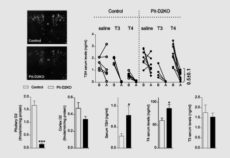
Hypothalamus-pituitary axis is wired to defend serum T3. PMID: 23524969
Share

Type II deiodinase (D2) activates thyroid hormone by converting thyroxine (T4) to 3,5,3′-triiodothyronine (T3). This allows plasma T4 to signal a negative feedback loop that inhibits production of thyrotropin-releasing hormone (TRH) in the mediobasal hypothalamus (MBH) and thyroid-stimulating hormone (TSH) in the pituitary. To determine the relative contributions of these D2 pathways in the feedback […]

14.02.2013 | 10:00 AM
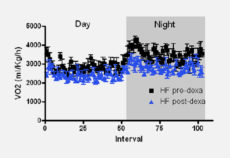
Dexamethasone reduces energy expenditure. PMID: 23408649
Share

Objective: To investigate how long-term treatment with dexamethasone affects energy expenditure and adiposity in mice and whether this is influenced by feeding on a high fat diet (HFD). Design and Methods: Mice were placed on a HFD for 2 weeks and started on dexamethasone at 5mg/kg every other day during the next 7 weeks. Results: […]