ARCHIVE
21.09.2012 | 10:00 AM
Major role played by β1-adrenergic receptor in BAT. PMID: 22728333
Share

Brown adipose tissue (BAT) is predominantly regulated by the sympathetic nervous system (SNS) and the adrenergic receptor signaling pathway. Knowing that a mouse with triple b-receptor knockout (KO) is cold intolerant and obese, we evaluated the independent role played by the b1 isoform in energy homeostasis. First, the 30 min i.v. infusion of norepinephrine (NE) […]
17.08.2012 | 5:52 PM
Hypothyroidism. Investigation and management.
Share

Michelle So, Richard J MacIsaac, Mathis Grossmann Australian Family Physician, Vol. 41, No. 8, August 2012 Abstract Background: Hypothyroidism is a common endocrine disorder that mainly affects women and the elderly. Objective: This article outlines the aetiology, clinical features, investigation and management of hypothyroidism. Discussion: In the Western world, hypothyroidism is most commonly caused by […]

20.06.2012 | 10:00 AM
Neuronal hypoxia induces nuclear import of D3. PMID: 22723689
Share

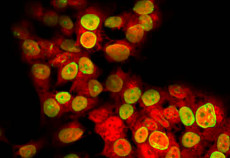
D3 redirection and accumulation in the cell nucleus is part of the hypoxia-induced reduction in thyroid hormone signaling. Inactivation of thyroid hormone in the nucleus, physically closer to where thyroid hormone receptors (TRs) are located, constitutes an advantageous mechanism to dampen thyroid hormone signaling and reduce metabolism. Studies of directed D3 glycosylation indicated that D3 […]

18.06.2012 | 9:44 PM
Hypothalamic secretory systems are influenced by TH. PMID: 22719854
Share

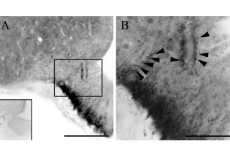
Hypothalamic neurosecretory systems are fundamental regulatory circuits influenced by thyroid hormone. Monocarboxylate-transporter-8 (MCT8)-mediated uptake of thyroid hormone followed by type 3 deiodinase (D3)-catalyzed inactivation represent limiting regulatory factors of neuronal T3 availability. In the present study we addressed the localization and subcellular distribution of D3 and MCT8 in neurosecretory neurons and addressed D3 function in […]

17.06.2012 | 11:03 AM
Clinical practice guidelines for hypothyroidism in adults.

Cosponsored by the American Association of Clinical Endocrinologists and the American Thyroid Association. Jeffrey R. Garber, Rhoda H. Cobin, Hossein Gharib, James V. Hennessey, Irwin Klein, Jeffrey I. Mechanick, Rachel Pessah-Pollack, Peter A. Singer, and Kenneth A. Woeber THYROID 22 (12), 2012 Background: Hypothyroidism has multiple etiologies and manifestations. Appropriate treatment requires an accurate diagnosis […]

13.06.2012 | 10:41 AM
2012 ETA Guidelines: The use of L-T4 + L-T3 in the treatment of hypothyroidism. PMID: 24782999
Share

Wilmar M. Wiersinga, Leonidas Duntas, Valentin Fadeyev, Birte Nygaard, Mark P.J. Vanderpump, European Thyroid Journal 2012;1:55–71 Background: Data suggest symptoms of hypothyroidism persist in 5–10% of levothyroxine (L-T4)-treated hypothyroid patients with normal serum thyrotrophin (TSH). The use of L-T4 + liothyronine (L-T3) combination therapy in such pa- tients is controversial. The ETA nominated a task […]

26.05.2012 | 10:00 AM
Inactivation of Dio3 in the heart causes fibrosis and LVH. PMID: 22403173
Share

Cardiac injury induces myocardial expression of the thyroid hormone inactivating type 3 deiodinase (D3), which in turn dampens local thyroid hormone signaling. Here, we show that the D3 gene (Dio3) is a tissue-specific imprinted gene in the heart, and thus, heterozygous D3 knockout (HtzD3KO) mice constitute a model of cardiac D3 inactivation in an otherwise […]

10.03.2012 | 10:00 AM
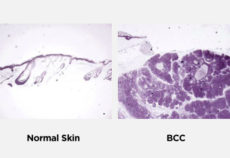
Deiodinases are expressed in cancer cells and tissues. PMID: 22675319
Share

Deiodinases constitute a group of thioredoxin fold-containing selenoenzymes that play an important function in thyroid hormone homeostasis and control of thyroid hormone action. There are three known deiodinases: D1 and D2 activate the pro-hormone thyroxine (T4) to T3, the most active form of thyroid hormone, while D3 inactivates thyroid hormone and terminates T3 action. A […]

25.12.2011 | 10:00 AM
ER stress decreases thyroid hormone activation. PMID: 22053000
Share

Cells respond rapidly to endoplasmic reticulum (ER) stress by blocking protein translation, increasing protein folding capacity, and accelerating degradation of unfolded proteins via ubiquitination and ER-associated degradation pathways. The ER resident type 2 deiodinase (D2) is normally ubiquitinated and degraded in the proteasome, a pathway that is accelerated by enzyme catalysis of T4 to T3. […]

09.11.2011 | 10:52 AM
Epicardial adipose tissue: emerging physiological, pathophysiological and clinical features. PMID: 21852149
Share

Epicardial adipose tissue is an unusual visceral fat depot with anatomical and functional contiguity to the myo- cardium and coronary arteries. Under physiological con- ditions, epicardial adipose tissue displays biochemical, mechanical and thermogenic cardioprotective proper- ties. Under pathological circumstances, epicardial fat can locally affect the heart and coronary arteries through vasocrine or paracrine secretion of […]